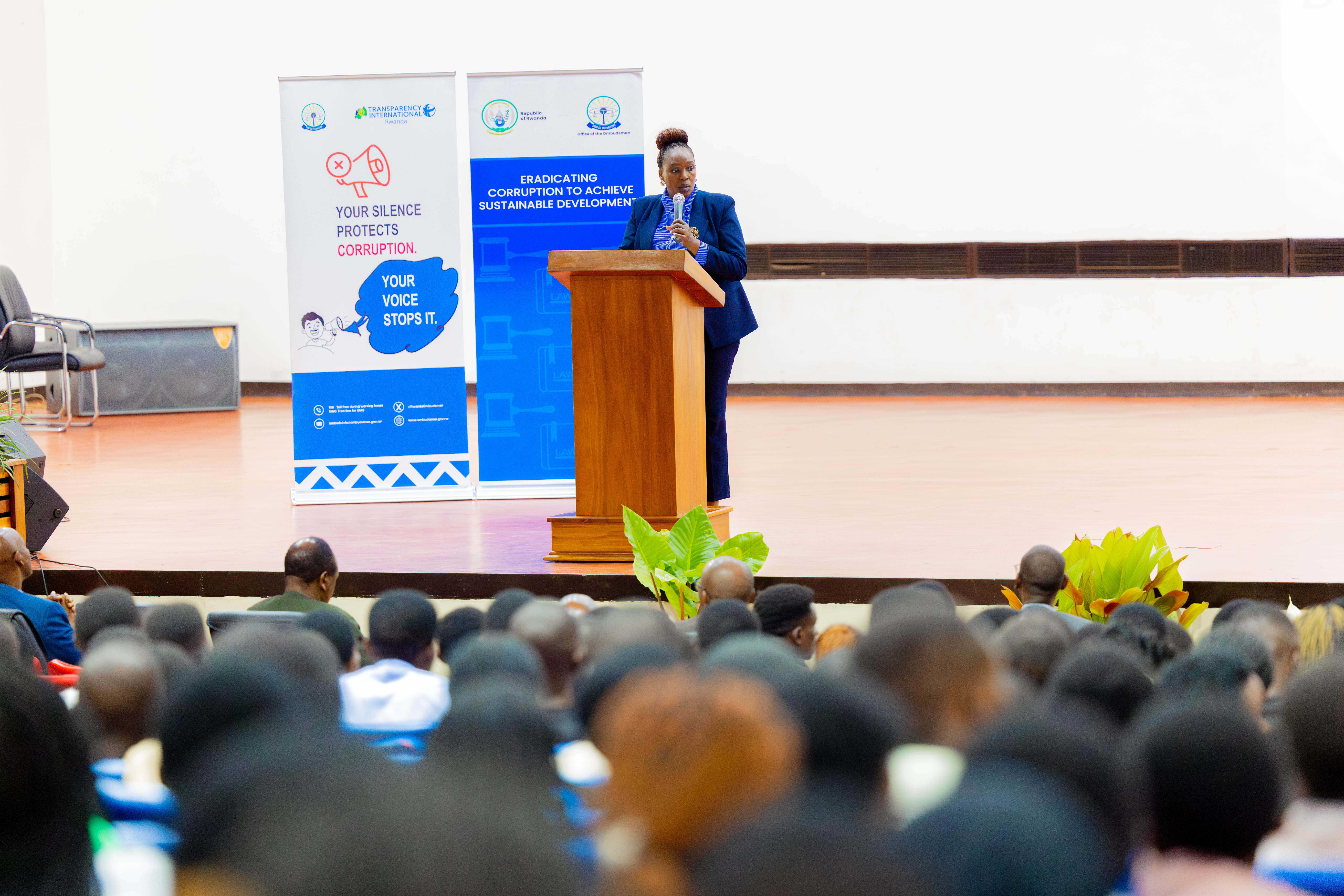
The Chief Ombudsman of Rwanda Hon. NIRERE Madeleine, has urged young people and higher learning institutions to take a leading role in preventing and fighting corruption, describing integrity and accountability as essential pillars for national development.
Speaking during a presentation at the University of Rwanda, Huye Campus, she emphasized that corruption continues to threaten ethical governance, public trust, and social progress if not addressed collectively.
She highlighted Rwanda’s long-term vision of becoming a corruption-free nation by 2050, with strong emphasis placed on transparency, justice, and responsible leadership. Quoting his excellence Paul Kagame, the Chief Ombudsman recalled that the fight against corruption is “a forever one” requiring sustained effort from all sectors of society. Corruption includes acts such as bribery, favoritism, embezzlement, misuse of public resources, and solicitation of illegal benefits. She noted that Rwanda’s anti-corruption laws provide severe penalties, including imprisonment and heavy financial sanctions for offenders.
The Chief Ombudsman also explained the importance of Anti-Corruption Committees established in institutions under Rwanda’s anti-corruption law. These committees are tasked with identifying corruption risks, monitoring vulnerable sectors, conducting awareness campaigns, and strengthening preventive mechanisms within institutions.
Particular attention was given to the role of youth in shaping a transparent future. Through Anti-Corruption Clubs in universities and schools, students are encouraged to organize awareness campaigns, report unethical practices, and use creative platforms such as music, poetry, and drama to promote integrity.
Achievements presented during the session included public awareness campaigns, anti-corruption celebrations, and nationwide training initiatives conducted between 2022 and 2025. More than 253,000 people, including students and public servants, were reportedly reached through anti-corruption and anti-injustice programs.
The Chief Ombudsman concluded by calling for stronger collaboration between government institutions, universities, civil society, and young people to eliminate corruption and build a culture of accountability across the country.
Speaking during a presentation at the University of Rwanda, Huye Campus, she emphasized that corruption continues to threaten ethical governance, public trust, and social progress if not addressed collectively.
She highlighted Rwanda’s long-term vision of becoming a corruption-free nation by 2050, with strong emphasis placed on transparency, justice, and responsible leadership. Quoting his excellence Paul Kagame, the Chief Ombudsman recalled that the fight against corruption is “a forever one” requiring sustained effort from all sectors of society. Corruption includes acts such as bribery, favoritism, embezzlement, misuse of public resources, and solicitation of illegal benefits. She noted that Rwanda’s anti-corruption laws provide severe penalties, including imprisonment and heavy financial sanctions for offenders.
The Chief Ombudsman also explained the importance of Anti-Corruption Committees established in institutions under Rwanda’s anti-corruption law. These committees are tasked with identifying corruption risks, monitoring vulnerable sectors, conducting awareness campaigns, and strengthening preventive mechanisms within institutions.
Particular attention was given to the role of youth in shaping a transparent future. Through Anti-Corruption Clubs in universities and schools, students are encouraged to organize awareness campaigns, report unethical practices, and use creative platforms such as music, poetry, and drama to promote integrity.
Achievements presented during the session included public awareness campaigns, anti-corruption celebrations, and nationwide training initiatives conducted between 2022 and 2025. More than 253,000 people, including students and public servants, were reportedly reached through anti-corruption and anti-injustice programs.
The Chief Ombudsman concluded by calling for stronger collaboration between government institutions, universities, civil society, and young people to eliminate corruption and build a culture of accountability across the country.
7 views
0 comments
Comments (0)
No comments yet. Be the first to comment!